What is the Workshops Program?
“Their purpose is not to educate the public or general body of Fellows but to bring together small groups of expert and highly motivated scholars to consider and foster the development of research in a particular area of great importance to society.”
Professor Peter Karmel AC, Academy President 1987 – 90
The Academy Workshops Program offers Australian social scientists financial assistance to host multidisciplinary workshops which aim to advance research and policy agendas on nationally important issues. The Academy supports up to eight workshops each year with funding to a maximum of $9,000 (excl GST).
Its purpose is to be a catalyst for innovative ideas in social science research and social policy, to build capability amongst young researchers and to foster networks across social science disciplines and with practitioners from government, the private sector, and the community sector on issues of common concern.
Over the past 30 years, the Academy is pleased to have been the catalyst for over 200 workshops involving thousands of leading experts across Australia.
How to apply
Workshop Grant applications are currently CLOSED and will open mid-2026.
Steps
- Review the Workshops Program Application Guidelines
- Complete the online application Jotform before 5pm on the closing date via this link: Workshop Application Form
- View a PDF template of the complete application form here.
Key dates
- Applications open: Monday, 12 May 2025
- Online information session: Thursday 26 June 2025, 10:00-10:45am
- Applications close: Monday, 4 August 2025
- Successful applicants notified: Late September 2025
- Workshops held: January – December 2026.
For more information contact us via: workshops@socialsciences.org.au
Advice for prospective applicants
- 00’00” Welcome
- 01’16” Acknowledgement of Country
- 08’20” Overview for prospective applicants
- 32’24” Past winner: Ass. Prof Alyssa Milton, USyd
- 48’02” Q&A
Frequently Asked Questions
I was told about the Academy’s Workshops Program by a colleague who works at another university. Their research centre received an invitation to apply, but we didn’t. Can we still apply?
Yes. The Workshops Program is open to all social science researchers across Australia, and you are welcome and encouraged to apply. Indeed, if you register your interest in the Workshops Program with us, we’ll make sure you get a personal invitation next time.
The Academy Fellow who is willing to act as co-convenor used to serve as a judge for the Workshops Program. Does that impact our eligibility?
No. All Fellows are eligible to apply as co-convenors for the Workshops Program.
Is it possible to be included in two proposals? (e.g., leading one, listed as a participant on another?)
Yes. Being listed in multiple applications does not impact on your eligibility, nor your chances of success (whether you are a Fellow or non-Fellow applicant). Ultimately, the decision to participate or not in multiple applications should come down to each researcher’s interest in the workshops’ topics and their availability to contribute.
I don’t know any Academy Fellows. Can I still apply?
Yes. We highly encourage applying teams to invite Academy Fellows as co-convenors, as one of the objectives of the Workshops Program is to promote dialogue among researchers in different career stages. Search our Fellow Directory to identify potential collaborators, and either contact them directly or reach out to the Workshops Program team to facilitate an introduction (via email to: workshops@socialsciences.org.au).
If you are unable to secure a suitable Fellow as co-convenor, you are still able to apply. Use the ‘Convenors’ section of the application form to explain your situation, and whether you remain open to collaborating with an Academy Fellow in the future (should your workshop be successful).
Can I apply to the Academy’s Workshops Program if the proposed workshop will physically take place overseas?
No. The Workshops Program is specifically targeted to benefit Australian researchers and universities. International collaborators are welcome to attend, though, either in-person or online.
My workshop will be virtual. Instead of travel and accommodation, can I allocate budget towards things like a research assistant and website development?
Yes. Past workshop winners have allocated budget in many creative ways, such as hiring a note-taking or scribe (so everyone can concentrate on the conversation), hiring a specialist science-writer or editor, or flying a couple of representatives to present their ideas at Parliament. Having said that, many do still appreciate the opportunity to use the funding largely for travel, accommodation or a welcome dinner. Particularly for workshops where participants have no pre-existing relationships or collaborations, in-person events create the most opportunities to build those bonds.
We would like to allocate some of the budget to pay travel and accommodation for some of our interstate participants. Is that OK?
Yes. In fact, travel and accommodation expenses have traditionally comprised a significant portion of the budget in many applications (until recently, as COVID has led many teams to opt for hybrid or virtual workshop formats).
Would it be acceptable to charge facilitators or participants a registration fee? Fee-paying participants would give us much-needed additional funds to scale our event
This may be considered in exceptional circumstances, but the Workshops Program is intended to bring together a broad and diverse group of social science researchers and practitioners based on their interest and expertise rather than their capacity to pay. We would encourage convenors to seek external funds from other sources first (university departments or other not for profits), or potentially request participants attending in person to fund all or part of their travel and accommodation expenses to allow funds to stretch further.
Note also that co-investment (cash or in-kind) is not a requirement for applications but is well regarded by assessors and has been successfully implemented by winners in the past.
We are having difficulties getting all prospective workshop participants to confirm attendance before the closing deadline. Can you advise how flexible you are in this regard?
Very flexible. In drafting the Participants section of your application, your goal should be to give assessors a clear idea about the spread of disciplines, research career stages, and types of stakeholders you plan on bringing together. Having a few critical participants confirmed will give assessors reassurance you are well positioned in your planning, but a well-designed participant mix should be your main objective. To this end, it is ok to list unconfirmed attendees, or even placeholders with descriptors of the participants you plan on bringing in (e.g., Senior Policy Officer from Treasury; Director of an Advocacy Organisation in the nutrition space). A well-balanced participant mix is a key indicator of potential success for your workshop.
I’m having trouble with the online application form! Who can I contact for help?
Get in touch with our Workshops Program team via workshops@socialsciences.org.au.
On application closing day, what’s the latest time we can submit?
Close of business or 5pm AEST. If you have difficulties submitting (e.g., technical), please get in touch and we will do our best to help you resolve the issue (email us to workshops@socialsciences.org.au).
Workshop Reports
Previous grant recipients
Please get in touch with us if you would like more information about these grants.
| Date | Workshop Title | Convenors | Keywords | Lead Institution |
|---|---|---|---|---|
| 2026 | Reframing practice: Site recording, methodologies, and ethics in Western Australian Aboriginal Heritage | Ms Amy Usher with Ms Dirima Cuthbert, Dr Jo Thomson and Mr Ken Haywood | Archaeology, anthropology, heritage, cultural heritage | Yamatji Marlpa Aboriginal Corporation |
| 2026 | From policy to implementation: leveraging marine social science to deliver Australia’s Sustainable Ocean Plan | Dr Georgina Gurney, A/Professor Emily Ogier, Professor Tiffany Morrison and Dr Carla Sbrocchi | Ocean governance, sustainability, marine science | James Cook University |
| 2026 | Illicit alcohol: a cross-disciplinary discussion mapping collective knowledge and highlighting research priorities | Dr Michaela Kowalski, Dr Nic Taylor, Professor Alison Ritter and Professor Michael Farrell | Public health, lived experience, alcohol use, alcohol advertising | The University of New South Wales |
| 2026 | The political economy of artistic freedom in Australia | Professor Desmond Manderson, Professor Sarah Joseph, Dr Karen Crawley and Dr Samid Suliman | Artistic expression, democracy | Australian National University |
| 2026 | An examination of the impact of extended out-of-home care on the pathways and outcomes for young care leavers | Professor Philip Mendes, Professor Melissa O’Donnell, Associate Professor Tim Moore, Associate Professor Jessica Russ-Smith and Dr Steven Roche | Carers, youth, out-of-home care | Monash University |
| 2026 | Expert roundtable on biodiversity and climate change | Ms Kate Nairn, Professor Stephen Dovers and Mr Drew Clarke AO | Biodiversity, climate change | Future Earth Australia |
| 2026 | Building a social science agenda for challenge-led research and innovation in Australia | Professor Rob Raven, Professor Xuemei Bai, Dr Heinz Schandl and Dr Christoph Brodnik | Research, innovation | Monash University |
| 2026 | Toxic living: exposure and embodiment in the Anthropocene | Professor Jakelin Troy, A/Professor Katherine Kenny, A/Professor Nadine Ehlers and Dr Jianni Tien | Health sociology, environmental sociology | The University of Sydney |
| 2025 | Transdisciplinarity for Socially Responsible Artificial Intelligence: Aligning Expertise in Social Sciences and Computing Research | Joann Cattlin with Professor Lisa Given FASSA, Dr Alexandra Ridgway and Professor Falk Scholer | Artificial Intelligence, research methods, social responsibility | RMIT University |
| 2025 | Preparing Nature & Society for a Hotter World | Professor Philippa Collins with Professor Daniel Noble, A/Professor Alison Bentley and Professor Xuemei Bai FASSA | Climate change, crisis | Western Sydney University |
| 2025 | Towards Understanding of the incidence and contexts of family violence related suicides. | Professor Heather Douglas AM FASSA with Professor Kyllie Cripps, Professor Kate Fitz-Gibbon and Dr Stefani Vasil | Domestic violence, family violence, suicide | The University of Melbourne |
| 2025 | Structure obstruction: understanding opposition to planetary health equity action in Australia | Professor Sharon Friel FASSA FAHMS with A/Professor Christian Downie | Planetary health, climate change | Australian National University |
| 2025 | Asia's Security Futures: A Multidimensional Approach | Professor Evelyn Goh FASSA with Dr Iain Henry and Dr Wai Yeap Chan | Asia, international security, regional security | Australian National University |
| 2025 | Cancer Culture: changing behaviour to improve public health | Professor Andrew May FASSA FRAS M.ICOMOS with Dr Thomas Kehoe | Public health, cancer, health promotion | The University of Melbourne |
| 2025 | Global Indigenous Data Sovereignty Summit | A/Professor Jacob Prehn with Professor Maggie Walter FASSA, Professor Ray Lovett and Professor Gawaian Bodkin-Andrews | Indigenous Data Sovereignty | The University of Tasmania |
| 2025 | Housing supply and planning reform: a critical intervention | Professor Kristian Ruming with Professor Bill Randolph FASSA, Dr Alistair Sisson and Dr Ryan van den Nouwelant | Housing, urban planning, crisis | Macquarie University |
| 2024 | Turning Youth Mental Health Research into Real-World Action: Making the Most of Australia’s Largest Nation-Wide Survey of Young People (Mission Australia's Youth Survey) | Dr Alyssa Milton with Professor Janeen Baxter FASSA, Dr Kate Filia and Rachel Christie | Youth, mental health | The University of Sydney |
| 2024 | Contextualising the Climate Crisis: Climate change and the beginning of the crisis decades | Associate Professor Ruth Morgan with Professor Katie Holmes FASSA, Dr Robert Naylor and Dr Elliot Honeybun-Arnolda | Climate change, crisis | Australian National University |
| 2024 | A Critical Lens on Mass Deportation of Non-citizens: Law, Crimes and Technology | Dr Sanzhuan (Sandra) Guo with Matthew Flinders Distinguished Professor Margaret Davies FASSA FAAL and Associate Professor Marinella Marmo | Justice, deportation, law | Flinders University |
| 2024 | Planet of Weeds: Invasive Plant Species, Coloniality, and Planetary Health | Dr Mardi Reardon-Smith with Professor Lesley Head FASSA FAHA | Environmental sustainability, planetary health, invasive plant species | Deakin University |
| 2024 | Critical Minerals for a Just and Sustainable Transition | Professor Susan Park with Professor David Schlosberg FASSA | Critical minerals, sustainability, transitions, justice | The University of Sydney |
| 2024 | Revitalising Indigenous-State Relations: Knowledge Exchange to Support Transformations in Indigenous Governance | Professor Ian Anderson AO FASSA FAHMS with Professor Sarah Maddison and Professor Morgan Brigg | Indigenous, governance | The University of Tasmania |
| 2024 | Owning the public interest: the impact on health and equity of privatisation and outsourcing of public services functions | Fran Baum AO PhD with Julia Anaf PhD | Privatisation, equity, government, public services | The University of Adelaide |
| 2024 | Decolonisation in Australia and our region in the 20th century and today | Professor Angela Woollacott FASSA FRHS FAHA with Professor Heather Goodall FASSA, Professor David Lowe FASSA and Dr Jon Piccini | Indigenous, decolonisation | Australian National University |
| 2023 | How can we minimise the adolescent uptake of vaping and related social and health harm? Findings report and Policy submission | Associate Professor Gary Chan, with Dr Janni Leung and Emeritus Professor Wayne Hall | Public health, youth, vaping | The University of Queensland |
| 2023 | Strategic Public Interest Litigation for Transparency and Accountability of Harmful Digital Marketing: A Researcher-Regulator-Community Dialogue Findings, Program | Associate Professor Paula O'Brien, with Professor Christine Parker FASSA, Professor Jeannie Paterson, and Professor Kim Weatherall | Digital marketing, marketing, harmful marketing | The University of Melbourne | The University of Sydney |
| 2023 | Successful strategies for improving access to justice for women who kill their abusers Findings | Associate Professor Danielle Tyson, with Professor Bronwyn Naylor OAM, and Professor Heather Douglas AM FASSA | Gender violence, abuse, justice, women | Deakin University | RMIT University | The University of Melbourne |
| 2023 | The new digital governance of welfare-to-work Findings | Redmond Barry Distinguished Professor of Political Science Mark Considine FASSA, with Associate Professor Siobhan O’Sullivan, Dr Michael McGann, and Dr Phuc Nguyen | Welfare, digital, employment | The University of Melbourne | La Trobe University | University of New South Wales |
| 2023 | Education and Anthropocene Findings | Alfred Deakin Professor Jill Blackmore AM FASSA, with Professor Julie McLeod FASSA, Professor Terri Seddon FASSA and Alfred Deakin Professor Russell Tytler FASSA | Education | The University of Melbourne | Deakin University | La Trobe University |
| 2023 | Australian Urban Robotic Futures: Potentials, Limits and Options | Professor Robyn Dowling FASSA, with Professor Simon Marvin, and Professor Martin Tomitsch | Robotics | The University of Sydney | University of Technology Sydney |
| 2023 | Teachers in early education (TEE): An innovative approach to assessing and supporting early childhood teaching quality Findings | Associate Professor Marianne Fenech, with Professor Sandie Wong, and Laureate Professor Marilyn Fleer FASSA | Early years, education, teaching quality | The University of Sydney | Macquarie University | Monash University |
| 2023 | Due process or due proceeds? The future of confiscation and related AML laws in Australia Findings | Dr Radha Ivory, with Dr Gregory Dale, and Emeritus Professor Arie Freiberg AM FASSA | Money-laundering, wealth, laws | The University of Queensland | Monash University |
| 2022 | Global Orders: Past and Present Findings | George Lawson with Iain MacGillivray and Christian Reus-Smit | East/West global order | Australian National University |
| 2022 | Building the recovery: Creating decent working futures in Australia | Ariadne Vromen with Rae Cooper, Brendan Churchill, and Josh Healy | Future of work, Workplace, Pandemics | Australian National University |
| 2022 | Building Education Systems for Equity and Inclusion Findings Other resources: Building Education Systems for Equity and Inclusion (slides) | Education for Inclusion (slides) | Building Alternative Indicators for Schooling (slides) | Excellence in Teaching (slides) | Research in First Nations Education (slides) | Excellence for All Students (slides) | Scott Eacott with Eileen Baldry | School education, Equity, Educational outcomes | UNSW Sydney |
| 2022 | Co-creating a policy pathway to assist Australia in meeting its commitment of halving food waste by 2030 Findings | Gamithri Karunasena with David Pearson, Sarah Wheeler, and Francesca Goodman-Smith | Food futures, Food waste, Policy | Central Queensland University |
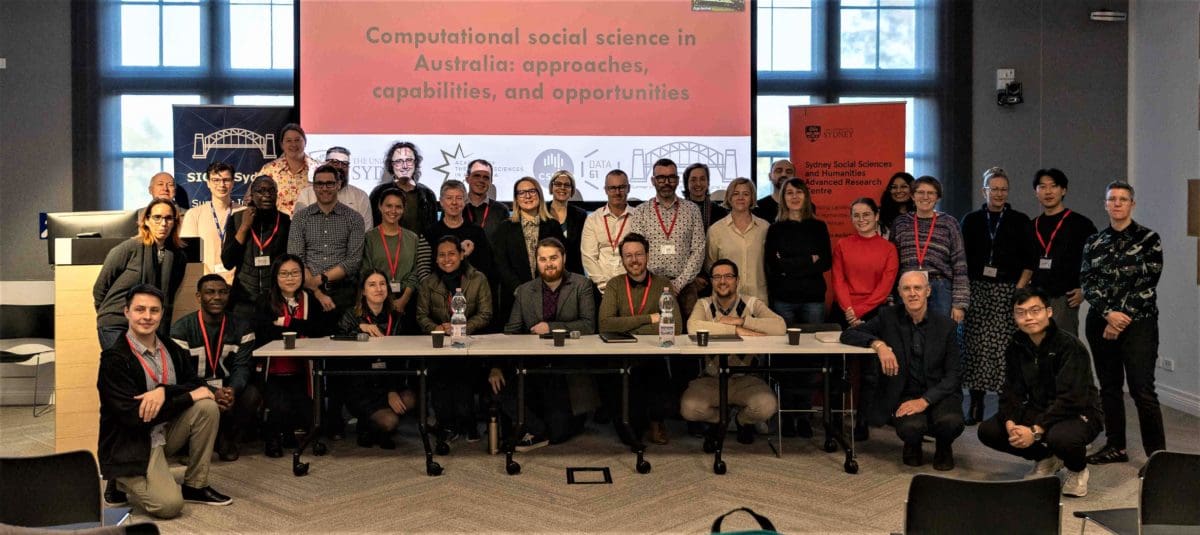
| 2022 | Computational social science in Australia: Approaches, capabilities, and opportunities | Olga Boichak with Nick Enfield and Simon Jackman | Social sciences, Research capabilities, Digital futures | The University of Sydney |
| 2022 | From Theory to Practice: Leveraging Feminist Approaches to Care at a Time of Crisis Findings | Megan Warin with Chris Beasley and Sophie Chao | Crises, Gender, Women, Care, Pandemic | The University of Adelaide |
| 2022 | Post Pandemic Positions: Australian NGOs and education in a century of internationalism - students, experts and friends Findings | David Lowe with Kate Darian-Smith, Jon Piccini, and Melanie Oppenheimer | International students, Education exports, Australia, Pandemics | Deakin University |
| 2022 | Age Friendly Universities and Age-Aware Curriculum Developmentin the Decade of Healthy Ageing | Nancy A Pachana with Alphia Possamai-Inesedy, Stephen Birch, and Peta Cook | University education, Ageing, Age-friendly | The University of Queensland |
| 2021 | The social sciences of epidemic disease modelling. | Warwick Anderson with Sonja van Wichelen and Kari Lancaster | social sciences, disease modelling, epidemic diseases, health | Sydney University’s Charles Perkins Centre |
| 2021 | Economies of virtue: the circulation of “ethics” in AI and digital culture. | Emma Kowal, Thao Phan, Monique Mann, Jake Goldenfein and Declan Kuch | ethics, virtue, AI, digital culture | Deakin University |
| 2021 | Australian urban policy: Achievements, failures, challenges. | Bill Randolph, Robert Freestone, Wendy Steele | Australia, urban policy, urban policy achievements, urb policy failures, urban policy challenges | The University of New South Wales |
| 2021 | International relations and Asian studies: Promoting dialogue about key strategic issues | Louise Edwards, Ian Hall, Anthony Milner | international relations, asian studies | Australian National University |
| 2021 | Risk and fragmentation of water knowledge in Melbourne: An early career perspective. | Lee Godden and Brendan Gleeson, Anna Kosovac | water, water knowledge, water in Melbourne, Melbourne, early career, risk | The University of Melbourne |
| 2021 | Global food supply chains in a world on the edge. | Jon Altman, Victoria Stead, Melinda Hinkson | global food supply, food supply chains, world supply | Deakin University |
| 2021 | How to research emotion in and around and law. | Sharyn Roach Anleu, Katie Barclay, Kate Rossmanith | emotion in law, emotion research, law research | Flinders University |
| 2021 | Initiating the development of a decadal plan for best practice parenting support. | Matt Sanders | parenting, parenting support, decadal plan, best practice parenting | The University of Melbourne |
| 2020 | Families of strangers? Socio-legal and technological innovation in donor-linked families. | Louis Walker, Deborah Dempsey, Fiona Kelly | families, genetics, donor-linked families, socio-legal, donor-births, donor technology, donor innovation | Swinburne University |
| 2020 | Australia’s future in space and space industry: An emerging agenda for the social sciences | Roy MacLeod, Jiye Kim, Susan Pond | australia in space, future in space, space, space industry, social sciences | University of Sydney |
| 2020 | Critical perspectives on the value of public-private partnerships in infrastructure development. | Stewart Clegg, Shankar Sankaran, Samuel MacAulay | public-private partnerships, private sector, public sector, infastructure development | University of Technology Sydney |
| 2020 | Mapping gendered systems of social protection and social support across welfare, family and disability domains. | Barbara Pocock, Kristin Natalier, Karen Soldatic | gender, gendered systems, social protection, social support, welfare, family, disability | Flinders University |
| 2020 | Using transparency to achieve equality. | Margaret Thornton, Dominique Allen, Alysia Blackham | equality, gender | Australian National University |
| 2020 | The contemporary corporation: Current challenges and future directions. | Margaret Davies, Vivienne Brand, Rosemary Langford | coporations, contemporary corporations, modern workforce, future workforce | Flinders University |
| 2020 | Tackling Gender Inequality through the Law: Improving Accountability for Gender-Responsive Laws at the Domestic Level Findings | Policy proposal | Diane Kirkby, Ramona Vijeyarasa | Law and gender, women, domestic law, migration, gender-based violence, international women's rights, reproductive control, politics, gender legislative index | University of Technology Sydney |
| 2020 | Economic uncertainty and labour market change in Australia: Challenges for public policy from income volatility. | Peter Whiteford, Matthew Gray | economics, economic uncertanty, labour market, australian labour market, public policy, income | Australian National University |