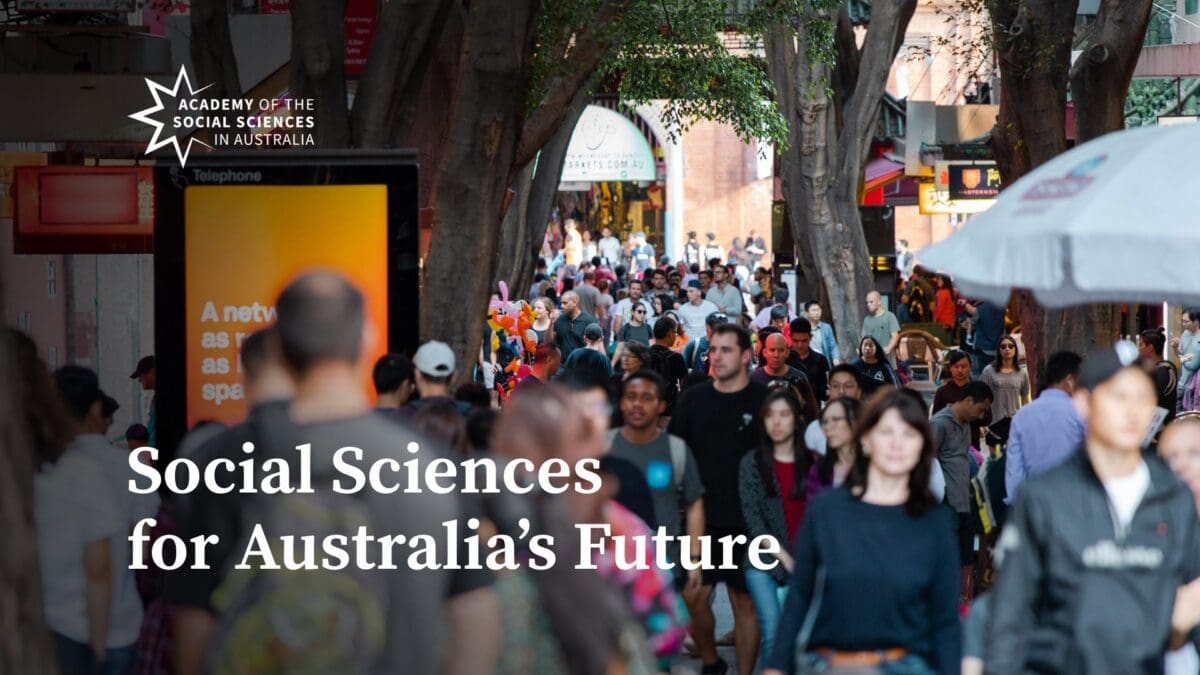
Millions of people will complete the national Census tonight, including Australians at home and visitors from overseas. In doing so, they contribute to one of the most important exercises in public knowledge that our nation undertakes.
Every five years, the Census provides a detailed picture of who we are: where we live, how we work, what languages we speak, the composition of our families, and how our communities are changing. The population data supports electorate redistributions that reflect population movements.
It is a remarkable national resource.
Australia is also one of relatively few countries that undertake an extensive Census every five years, rather than the international norm of every 10 years, making the Census even more valuable in Australia as we get more regular snapshots of our community and its changes.
But while the Census tells us what is happening across Australia, understanding why it is happening, and what we should do about it, requires something more.
It requires the social sciences.
Economics, psychology, sociology, political science, history, anthropology, education, law, geography and many other disciplines all form part of the social sciences ecosystem. Together, they help us understand not only how society operates but how it can be improved.
That is why the release of the Academy of the Social Sciences in Australia’s new Social Sciences for Australia’s Future report on Census Day is so timely. The report provides a snapshot of the strengths and opportunities of Australian social sciences across education, research and public policy, drawing on extensive consultation with stakeholders from across the sector.
From housing affordability and economic productivity to the impacts of artificial intelligence, climate adaptation, democratic resilience and population ageing, Australia faces challenges that are as much social as they are technical. Data alone cannot solve these challenges, but quality data and evidence helps. We need expertise in human behaviour, institutions, cultures, communities and decision-making.
The social sciences help explain why some policies succeed while others fail. They reveal how technological change affects different groups of people. They help governments understand public trust, businesses understand consumers, and communities navigate periods of rapid transformation.
The Census itself demonstrates this point. The information it gathers is not simply an exercise in counting people. It is the foundation for decisions about schools, hospitals, transport networks, workforce planning and public services. Understanding the meaning of those numbers, and translating them into effective policy, depends on the disciplines that study society and human behaviour.
Former Chief Scientist, and report Steering Committee Member Dr Cathy Foley has described social science as the “secret sauce” that is foundational to innovation. That observation is more relevant than ever.
Australia needs world-class science and technology. But innovation does not occur in a vacuum. Whether it is the transition to net-zero emissions, improvements in healthcare, or strengthening national productivity, success depends on understanding how people respond to change, how institutions function and how communities can be brought along in the process.
The social sciences make substantial contributions across Australian society. Researchers are helping governments respond to misinformation, improve educational outcomes, address social inequality, strengthen democratic institutions and develop more effective responses to public health challenges.
If Australia is to fully realise the benefits of social science expertise, we must invest in the people and institutions that generate it.
That means supporting students who choose social science pathways. It means strengthening research funding settings that recognise the importance of interdisciplinary work and collaboration. It means creating better opportunities for early and mid-career researchers to build sustainable careers. And it means ensuring that social science expertise is embedded in the processes through which governments develop policy and evaluate outcomes.
Importantly, it also means broadening public understanding of what the social sciences are and why they matter.
The Census reminds us that every person, household and community has a story, and every statistic represents our individual and collective human experience. Good policy requires both numbers and understanding. The social sciences help us to identify and respond to both.
Today, as Australians contribute their data to one of the country’s most significant national datasets, we should also recognise the value of the disciplines that help interpret that information and translate it into better outcomes for society.
Counting people and their socio-economic characteristics matters. Understanding people matters even more.
If Australia is serious about building a prosperous, resilient and inclusive future, the social sciences must be part of the national conversation, not at its margins but at its centre. The release of Social Sciences for Australia’s Future is an opportunity to ensure they are.
Professor David Kalisch FASSA, Economist and former Australian Statistician
Professor Kate Darian-Smith, President of the Academy of the Social Sciences in Australia