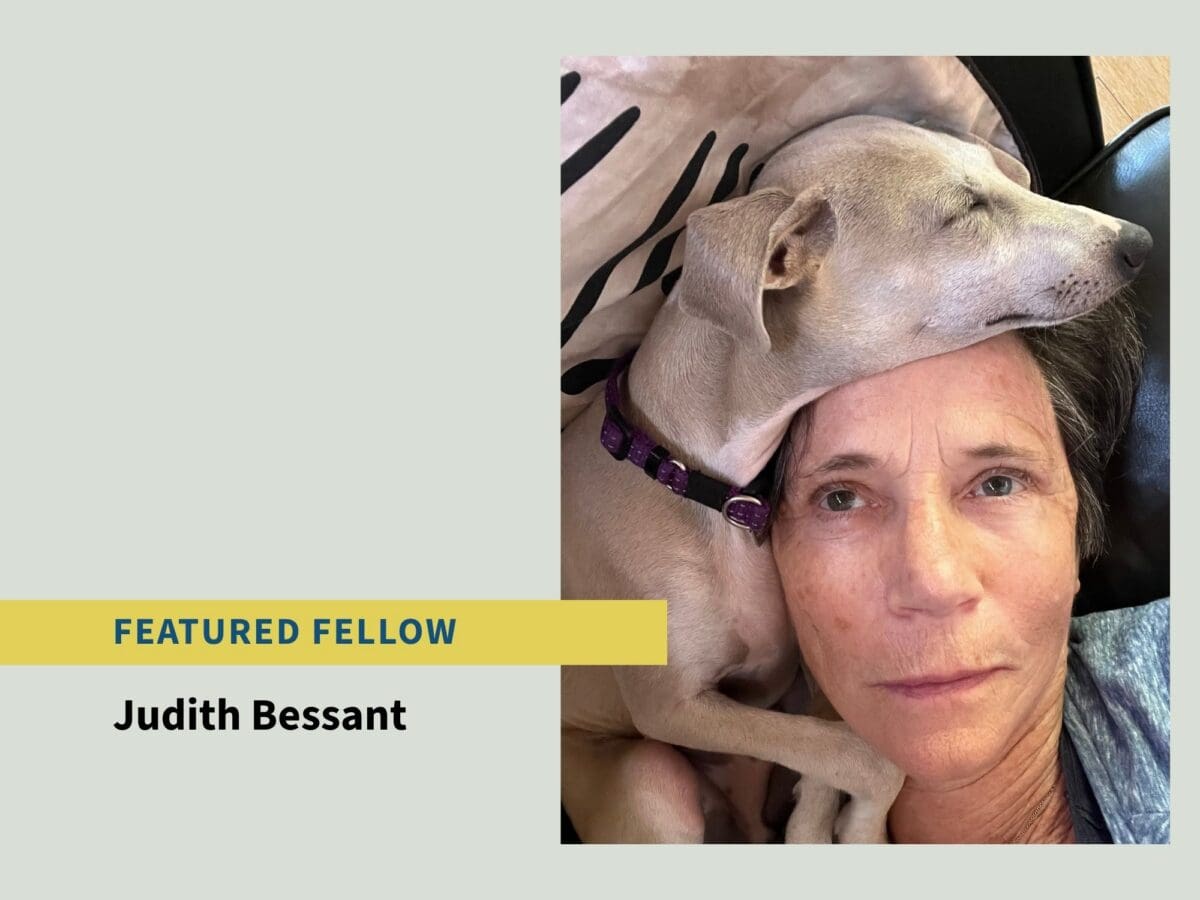
*Distinguished Professor Bessant is pictured above with her dog, Frankie. Frankie’s social science qualifications are not listed here, but can be supplied upon request.
Affiliation: RMIT School of Global, Urban and Social Studies
Discipline: Sociology
Year elected: 2024
What initially drew you to your field of study?
I was first drawn to youth studies and to related fields like politics, history, technology studies and planetary justice based, in part, on my experience and observations initially as a school teacher and later as an academic educating youth workers. Too many times I saw children and young people misrecognised in ways that denied their capacities and rights as political agents. Amongst other things this led to their marginalisation and exclusion from decisions that directly affected them. It was – and is- testimony to powerful adultist assumptions that informed and continue to shape how children and young people are represented and positioned.
As a teacher and then as academic working in the youth sector for a number of years I also received many reports of the systemic sexual abuse of children and young people by people in positions of authority and responsibility. Those on-going revelations outraged me and moved me to make many formal reports and complaints. That experience also drew me towards some of the issues I now research and write about.
These experiences plus my faith in the idea of democratic renewal is what drew me to the social sciences. Of course some will say given the current state of the world this is a foolish pipe-dream. Perhaps so, but I continue to believe, bolstered by a realistic sense of hope, that democratic renewal and justice which is genuinely inclusive of young people is achievable.
What should your field of study be doing more of right now?
‘My fields of study’ could be using their research and authority more to call on governments, political and business elites to recognise and assume the responsibility they have to address the big problems we a now face. This would require that academics, in hand with university managers, to work with political elites to think about what we-they are doing and how we-they can better exercise power to address the critical issues like the planetary crisis, to promote justice and human and non-human flourishing.
What continues to motivate your work?
I love ideas and the intellectual life that being an academic makes possible. This is what so often motivates me.
It is the creative, sometimes solitary, sometimes collaborative, work involved in thinking, feeling, arguing, writing and sometimes even drawing and painting, that helps me get clarity about my sense of purpose, about what a good life can look like, and what is needed to take us in that direction. Having clarity of purpose in my work, along with being a little stubborn, makes a huge difference in terms of motivation. Ideas, moral emotions, thinking and writing help clarify what is happening and what needs to be done, even when things are difficult.
Where is your ‘happy’ place?
My happy place is being with my human and non-human family, just hanging about, singing, being silly and doing ordinary things like having a meal or playing and sometimes going on adventures together.
What is your desert island book, song and/or movie?
In terms of music – who can go past Paul Robeson or Roy Orbison? They are very different singers I know, but I just can’t decide who I love more.
But then I don’t know whether I love K.D Lang’s version of Leonard Cohen’s ‘Halleluhah’ more than Cohen’s own rendition of it. They both move me to tears every time I hear that song. … I know it’s not a very cheery thing to say, but it’s what I’d like played at my funeral.
Then if you want to get in the groove, let’s not forget the wonderful Nina Simone’s ‘Mr Bojangles’ or Otis Redding’s ‘Sittin on the dock of the bay’ – They are magical and take me to wonderful places.