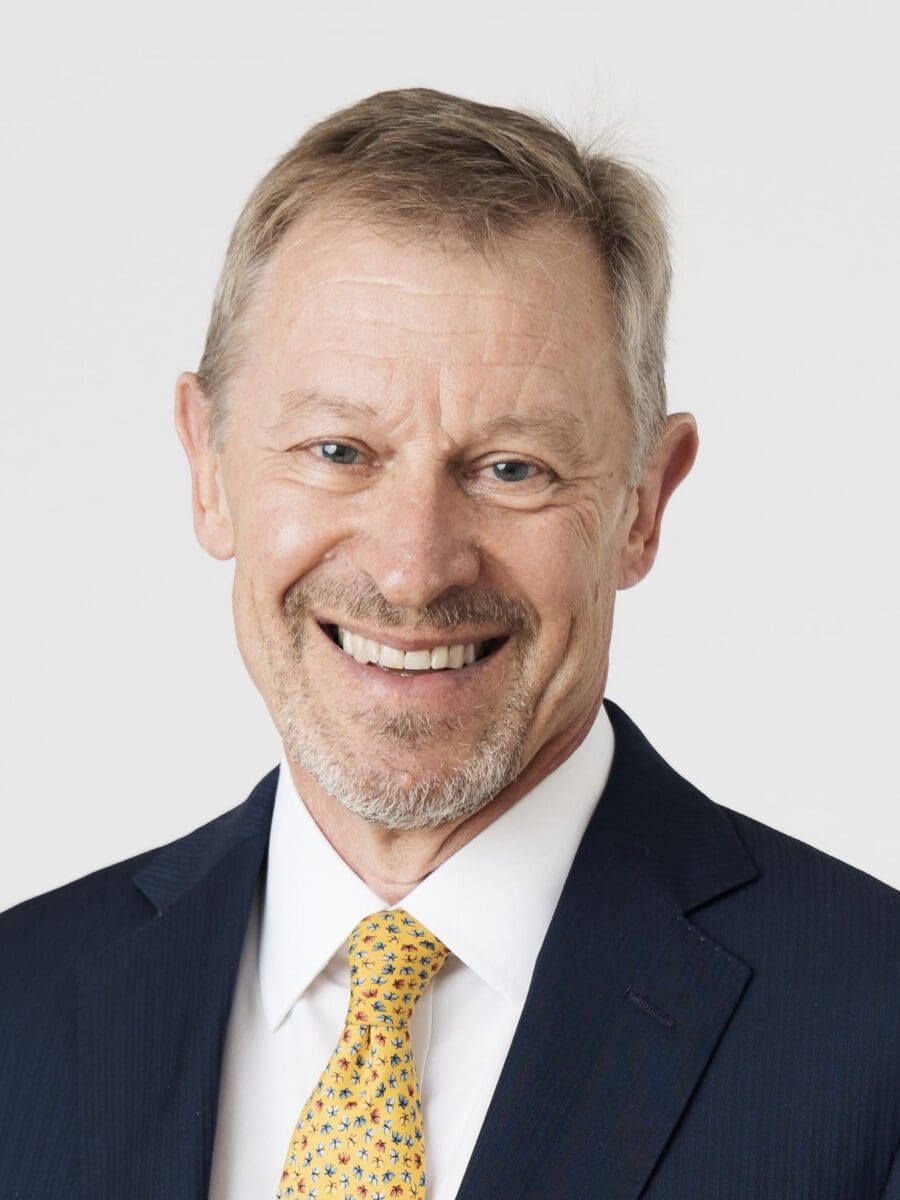
Professor David Kalisch
Discipline: Economics
Year elected: 2021
What initially drew you to your field of study?
I was drawn to economics while at high school, attracted by its systems approach and its relevance to key issues facing society. Stagflation was emerging as the key economic issue at the time and many key societal changes were underway.
What are you most proud of?
Being able to contribute to major public policy considerations in the 1990s and 2000s in important areas of social policy, including retirement incomes, welfare to work and family and children’s policy. This included drawing upon key insights from the research community, contributing to the research effort and helping initiate major longitudinal and linked data resources. More recently, having the opportunity to help transform the ABS to improve the quality of its key statistics and provide greater access for researchers to its valuable data assets.
What question or issue, in your field, keeps you awake at night?
My career has largely focussed on the use and production of quality information and insights, drawing upon the best available evidence. I am very much concerned by what I perceive to be the increased proliferation of opinions and assertions that have little or no basis within available evidence, and the deleterious impact this is having on public policy generally. I worry that popular assertions are gaining traction over the best evidence, especially in this environment of increased reliance upon social media. How can the research community focus become more savvy and more impactful in the public policy debate?
How would you describe your work at a dinner party?
Currently, I have a portfolio of part-time activities, that includes Board roles with the ACT Electoral Commission, the Saudi Government Statistics Authority and a philanthropic financial institution. While each of these organisations are diverse, they have some commonalities of delivering public value, requiring sound governance, workforce capability and organisational culture, prioritisation of effort and risk management. In addition, I have the opportunity to contribute to the Academy through its Policy Committee and the Advisory Committee of the Australian Research Council. This still gives me plenty of time for recreational pursuits and more time with my family.
What should your field of study be doing more of right now?
I would like to see economics and social sciences play an even greater role in critically assessing and informing public policy, so we can better inform the public, government and Parliaments of what works and what doesn’t work. The establishment of the Australian Centre for Evaluation is a positive development, but is very modest with its current scale and potential impact. Researchers outside government are more likely to publish outcomes from quality evaluations irrespective of the results.