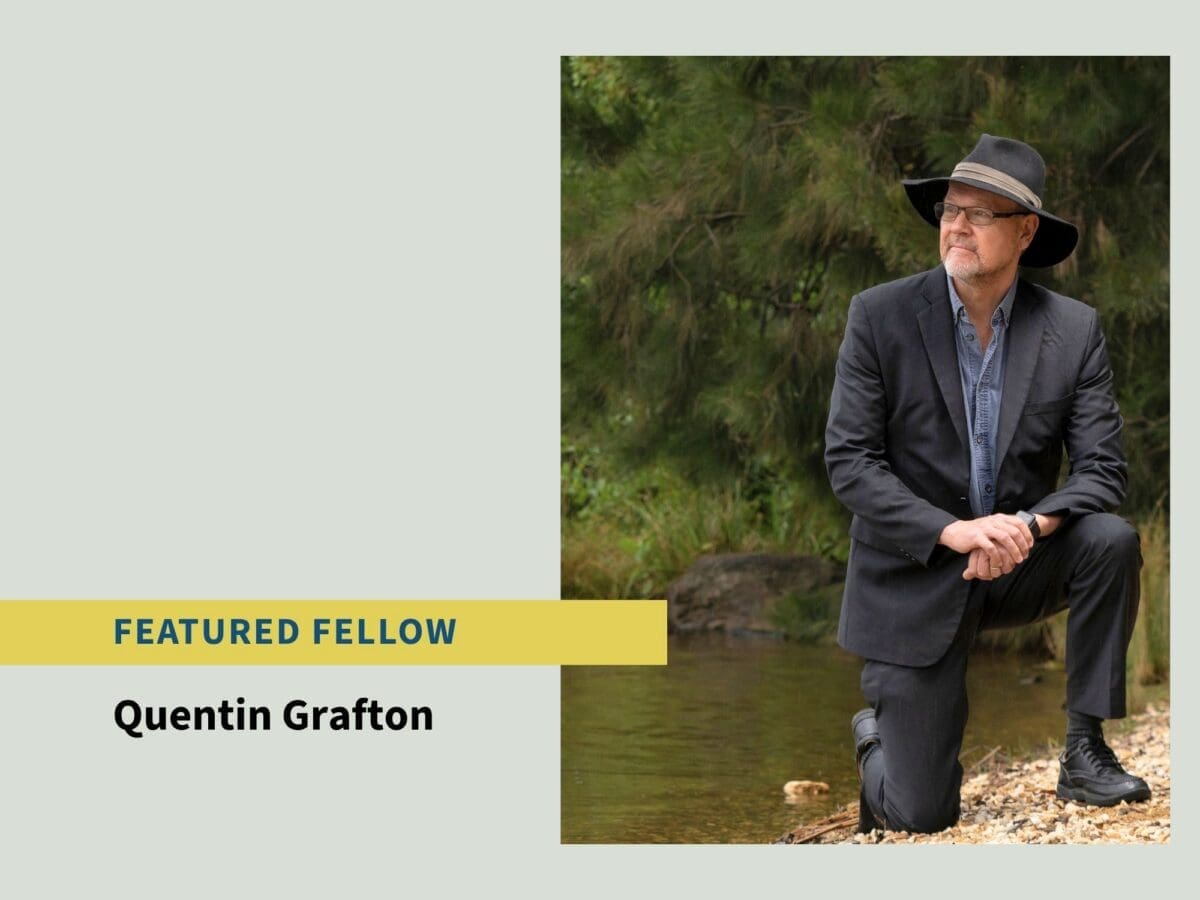
Professor Quentin Grafton
Affiliation: Centre for Water Economics, Environment and Policy, Australian National University
Year elected: 2013
How would you describe your work at a dinner party?
I guess I would say: “I’m researcher and economist who works in the area of the environment with focus on water and how the environment connects to people and place”. If they asked for more detail I would talk about some key findings and ways forward and what means for Australia, and the world.
And if they still wanted more, I would point them to SBS OnDemand and a film a initiated and co-directed with Anne Poelina called ‘EveryOne, EveryWhere, EveryWhen’ which is about three Living Rivers in Australia and the struggle for water justice. It’s free to view.
What initially drew you to your field of study?
I studied economics from when I was a teenager and was impressed with the way it helped me better understand the world. While I’ve had a life-long focus on natural resources and the environment, I became focused on water issues during the Millennium Drought that got underway around 2000 and ended in 2010. During the Millennium Drought I was hearing lots of comments by different people and interest groups, and politicians, but I wasn’t hearing the analysis and ways forward to help resolve the water crisis. So, I got involved!
What role do the social sciences play in your work?
Everything I do has a social science lens in it. My training is in economics, but I also have worked in public health, hydrology, and several other fields of study. Each field has its own value add and provides its own insights that wouldn’t otherwise be visible without an interdisciplinary perspective. So yes, social science is really important to understand the world but so are other ways of knowing.
What are you most proud of?
I guess it’s the teams that I have helped convene and sometimes lead, and the people that I have been able to support and/or mentor. The teamwork I have been part of is not about ‘getting the work done’ but rather about helping to empower others to be best that that they can be while helping to make the world a little bit better than it would otherwise be.
Tell us about a recent moment of motivation or inspiration?
Most recently, it would be helping to convene and present at the Second International Day for Water Justice that was jointly organised with the Mexican Government and the Water Justice Hub and took place 25 and 26 January 2026in Mexico. The first event was held in Canberra in 2025, and we plan to convene the third in South Africa in 2027.
International Day for Water Justice is the first global effort dedicated to co-operatively respond, via community-led initiatives, to the challenges of water injustice in relation to water access, use, and governance. In Mexico in 2026, we heard from Indigenous Kanari campaigners Carmen Luisa Pérez Arevalo and Rosalia Paguay are defending their sacred lakes and waters, Kimsakocha, threatened by mining developments. For their peaceful protests, they have been criminalized and subject to threats and acts of violence including the bombing of one of their homes. It’s stories like these that inspire me to keep on doing what we need to do in support of water justice.
What question or issue, in your field, keeps you awake at night?
I know what keeps me awake at night, it’s accelerated climate change—the average global surface temperature is now increasing at about 0.350C per decade, double the rate it was until the early 2000s. This has huge implications for what need to be doing in all dimensions, including water. Without climate justice, water justice and social justice the world will struggle to deliver a better (or even maintain) life for humans and non-humans.
What should your field of study be doing more of right now?
In terms of economics, some in my profession need to ‘unlearn’ what they think they know and see what’s happening in the world and consider what this means in terms of their long-held assumptions.
In terms of water, we need many more ‘water people’, be it in communities or researchers or policy makers to help deliver water justice: a process that supports equitable, sustainable, and culturally appropriate access to healthy water, recognizing both human rights and the collective rights of peoples.
What continues to motivate your work?
The world needs fixing in so many ways. I’m motivated to work with others to help, albeit in a very small way, to support solutions to what’s wrong. I see my role as a ‘truth teller’ to examine and use analyses to better understand what’s happening and to discern better ways forward rather than assuming ‘business as usual’ will deliver what needed (it won’t!).
Where is your ‘happy’ place?
I recently started learning guitar and that’s a great place for me! Spending time at home and simple pleasures, such as walking our dog, are also happy spaces.
What is your desert island book, song and/or movie?
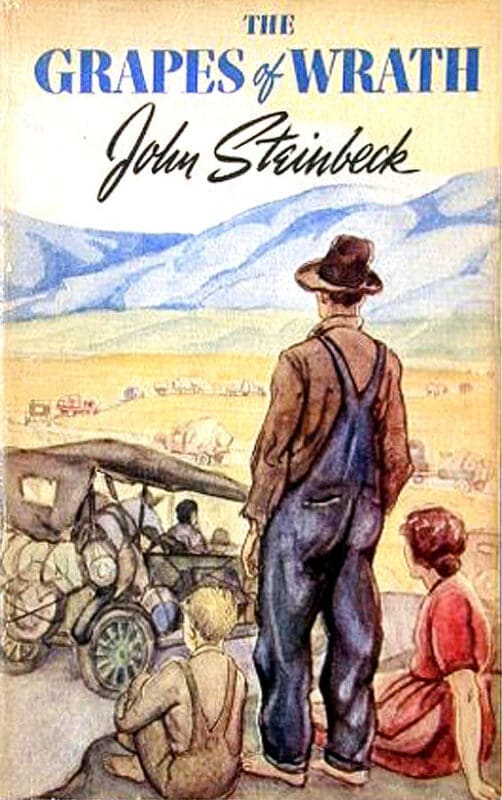
My favourite novel is ‘Grapes of Wrath’ by Jon Steinbeck. I keep on returning to it as it provides a timeless view of injustice and how people can ‘push back’ on injustice if they work together and help each other.
My favourite song is ‘Let it Be’ by the Beatles. I never get tired of hearing it! It inspires me.
I have several favourite movies, but I guess I would go with the classic, ‘The Sound of Music’. It has goodies and baddies, amazing songs, wonderful cinematography and is an uplifting story.